Views: 182 Author: Site Editor Publish Time: 2025-06-18 Origin: Site
Flexographic printing is a key technology in the packaging and labeling industry, enabling high-speed and high-quality printing on various substrates such as paper, plastic, and film. With increasing demand for precise label quality, the integration of label inspection machines into flexo printing lines has become essential. In this article, we explore the different types of flexo printing machines, their specific roles, and how label inspection equipment complements each machine type to ensure quality control.
Flexographic printing, often referred to simply as “flexo,” is a modern adaptation of the letterpress method. It uses flexible relief plates and fast-drying inks to produce high-volume prints on roll-fed materials. The system is highly versatile and is widely used for printing packaging materials, labels, corrugated boxes, and more.
The essence of flexo printing lies in its simplicity and speed. It utilizes a series of rollers—anilox rollers, plate cylinders, and impression cylinders—to transfer ink with consistent pressure and registration. However, maintaining accuracy in such high-speed operations calls for automated monitoring systems like label inspection machines, which identify defects such as misregistration, missing text, or color variation.
Flexographic printing machines come in several configurations. Each type offers unique benefits, particularly in how they handle substrates, ink delivery, and registration. Here are the most common types:
The stack type flexo printing machine features separate printing stations arranged vertically, one above the other. Each color unit is stacked, and the substrate moves vertically through the press.
Advantages:
Ideal for printing on both sides of the substrate.
Accommodates a wide range of substrates, including paper, foil, and plastic films.
Simple to operate and maintain.
Drawbacks:
May require more floor-to-ceiling space due to vertical design.
Limited registration precision at high speeds compared to other designs.
In stack presses, integrating label inspection machines at the final station ensures defects introduced by vibration, ink build-up, or plate wear are detected in real-time.
In a central impression (CI) press, all color stations print on a single, large impression cylinder. This configuration maintains perfect substrate tension and ensures precise color-to-color registration.
Advantages:
Superior registration accuracy.
Best suited for thin films and flexible packaging.
Compact design minimizes web movement.
Drawbacks:
Complex to clean and maintain due to tight configuration.
Substrate changeover can be time-consuming.
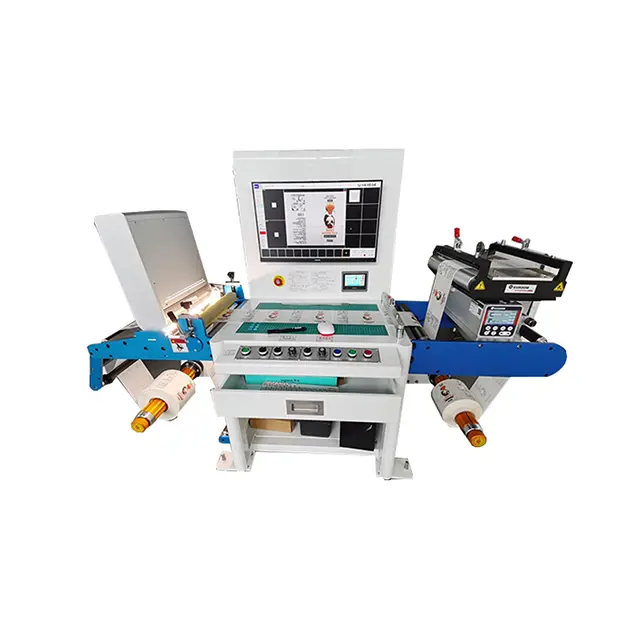
Label inspection systems are crucial for CI presses. These machines detect print imperfections such as ink smudges, streaks, or missing labels, especially when printing fine graphics or barcodes on flexible materials.
In-line flexo machines have all printing units arranged in a straight horizontal line. These are often used for narrow web applications such as labels, tags, and folding cartons.
Advantages:
Allows integration with die-cutting, laminating, and UV curing systems.
Best for high-value, short-run production.
Offers modular flexibility for future upgrades.
Drawbacks:
Slightly larger footprint than CI presses.
May struggle with precise registration on lightweight substrates.
This type of press works seamlessly with label inspection machines, which can be positioned post-print or post-die-cutting to monitor every detail. Faults like die misalignment or incomplete label cutouts are instantly flagged and rejected.
Label inspection machines are automated vision systems that use high-resolution cameras and advanced image processing algorithms to inspect printed labels in real-time. These systems can be standalone units or integrated into flexo presses.
Defect Detection: Detects misprints, smudges, missing text, barcode errors, and color inconsistencies.
Quality Control: Compares every printed label against a master reference to ensure consistency.
Traceability: Generates inspection reports and defect logs for traceability and compliance.
Reduces waste and rework costs.
Increases production efficiency by minimizing downtime.
Enhances brand reputation by ensuring flawless product presentation.
The synergy between flexo printing and label inspection technology ensures a seamless workflow from print to final packaging.
Here’s a comparison table to highlight their complementary roles:
| Feature | Flexo Printing Machines | Label Inspection Machines |
|---|---|---|
| Primary Function | Prints on flexible substrates | Inspects printed labels for defects |
| Substrate Handling | Paper, plastic film, foil, etc. | Post-print material (mostly labels) |
| Technology Used | Anilox rollers, flexo plates | High-res cameras, image processors |
| Integration | Core production unit | Auxiliary but essential QC unit |
| Error Prevention | Minimal without inspection | Real-time detection and rejection |
| Output Quality Assurance | Depends on operator | Ensured by automation |
This comparison makes it clear that while flexo machines create value, label inspection machines protect that value.
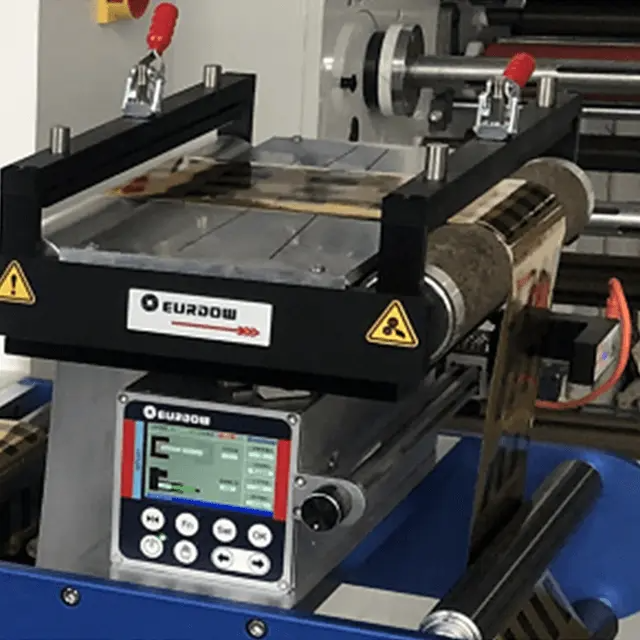
Yes, most modern label inspection systems are modular and adaptable. They can be mounted on CI, stack, and in-line flexo presses, depending on the production needs and space availability.
Label inspection machines can detect:
Color shifts and mismatches
Print registration errors
Barcode and QR code readability issues
Missing or incorrect text
Die-cut inaccuracies
Not necessarily. Some production setups use multiple inspection points—after each print station, after die-cutting, and before final rewinding—to ensure full control over the quality process.
High-quality inspection systems are designed to work at full press speed. They do not slow down production; in fact, they often increase throughput by reducing manual checks and post-run rework.
By preventing defective labels from reaching the customer, businesses avoid product recalls, reputation damage, and wasted materials. The ROI from label inspection systems often justifies the upfront investment within a short period.
The world of flexographic printing is evolving rapidly, with demands for greater precision, shorter runs, and zero-defect products. While flexo printing machines lay the foundation for high-speed, high-volume printing, the critical role of label inspection machines cannot be overstated. These systems serve as the final checkpoint, ensuring that every label, tag, or package meets stringent quality standards.
Understanding the differences between stack, CI, and in-line flexo machines enables better decision-making for your production needs. And by integrating robust inspection technologies, companies can stay competitive in an increasingly quality-conscious market.