Views: 0 Author: Site Editor Publish Time: 2026-01-27 Origin: Site
A die cutting machine is a mechanical device used to cut materials into specific shapes and sizes using a die—a custom-shaped tool made of steel or other durable materials. The die is pressed against the material, and under high pressure, it cuts through the material to create the desired shape. Die cutting machines are versatile and can cut a variety of materials, including paper, cardboard, plastic, fabric, and foam. They are commonly used in industries such as packaging, label production, and crafting for creating intricate designs, precise shapes, and custom-cut pieces. These machines come in different types, such as flatbed die cutters, rotary die cutters, and laser die cutters, each offering specific advantages depending on the scale and complexity of the job. The efficiency, accuracy, and speed of die cutting machines make them essential for high-volume production, where precision and consistency are critical.
Flatbed die cutting machines are designed for high-precision cuts on large sheets of material. The die is mounted on a flat surface, and the material is fed through under the die. These machines are ideal for complex shapes and small to medium production runs, where accuracy and detail are crucial. Flatbed die cutting is commonly used in industries like packaging, where precise cuts are required for custom boxes, folding cartons, and labels. It’s especially effective for cutting thick materials or large, rigid sheets.
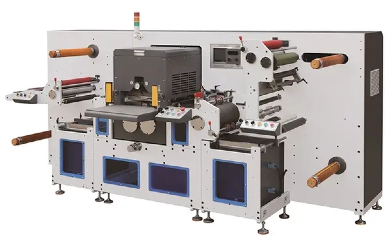
Rotary die cutting machines are used for high-speed, continuous production. These machines feature a rotary die mounted on a cylinder, which rotates as the material moves through. This process allows for faster cutting compared to flatbed die cutting, making rotary machines ideal for mass production of items like labels, stickers, and flexible packaging. The ability to cut continuously without stopping reduces downtime and increases efficiency, making it suitable for industries that require high-volume output.
Laser die cutting uses a laser beam to cut materials with extreme precision and detail. The laser is directed at the material, which is then vaporized, allowing for highly intricate and complex shapes to be cut. This type of die cutting is ideal for small, detailed cuts and is commonly used in applications such as crafting, prototyping, and highly intricate labels. Laser die cutting offers more flexibility than traditional methods, as it doesn’t require physical dies, making it suitable for custom or low-volume production where design complexity is high.
Die cutting machines follow a simple process involving material feeding, cutting, and ejection of the finished product:
The material, such as paper, plastic, or fabric, is fed into the machine, either manually or automatically, depending on the machine.
The die, made from steel, rotary material, or laser, applies pressure to cut the material into the desired shape.
After the cut, the waste material is ejected, and the finished piece is collected for further use or packaging.
Common in flatbed die cutting, steel rule dies are made from flat steel and are used for versatile cuts on various materials. Ideal for small and medium runs, they are cost-effective and precise.
Used in rotary die cutting, these cylindrical dies rotate for continuous, high-speed production. They are great for cutting labels, stickers, and flexible packaging.
Laser die cutting uses a focused laser beam for intricate, detailed cuts without physical dies. This method is ideal for custom designs and low-volume production.
Die cutting machines are widely used in the packaging industry to create custom shapes and designs for various packaging materials. They are essential for cutting cardboard, corrugated materials, and other substrates into custom sizes and shapes for boxes, containers, and blister packs. This process allows for high efficiency and precision, ensuring that packaging is tailored to fit specific products while maintaining a professional appearance.
In the labeling industry, die cutting machines are used to produce precise, custom labels and stickers. Whether for product labeling, barcodes, or decorative stickers, die cutting ensures that each label is accurately cut to shape, whether it’s round, square, or a custom design. These machines provide speed, accuracy, and high-volume capabilities, making them perfect for mass production of labels for bottles, boxes, and other products.
Die cutting machines are also popular in the crafting industry, particularly for greeting cards, scrapbooking, and other paper-based crafts. They allow crafters to create intricate, detailed shapes and designs with precision, enhancing the creativity and versatility of craft projects. Whether it’s for personal use or small-scale production, die cutting machines provide an efficient way to create custom designs in various materials like paper, fabric, and vinyl.
Die cutting machines are known for their high accuracy and precision in producing clean, exact shapes. The use of custom-made dies ensures that every cut is consistent, making it ideal for applications where detail and accuracy are crucial, such as in labels, packaging, and crafting. This precision helps reduce material waste and ensures a high-quality final product.
One of the key advantages of die cutting machines is their ability to cut through a wide variety of materials, including paper, cardboard, plastic, fabric, and even foam. This versatility allows businesses to produce custom shapes for a range of applications, from packaging to decorative items. Whether for soft or rigid materials, die cutting machines can handle different substrates with ease, increasing their usefulness across multiple industries.
Die cutting machines significantly increase efficiency in high-volume production. They are designed to handle continuous, fast-paced production runs, making them ideal for industries that require large quantities of products, such as labels, stickers, and packaging. The automated process reduces manual labor and downtime, allowing for consistent output with minimal interruptions. This results in faster turnaround times and lower production costs, making die cutting an efficient and cost-effective solution for bulk production.
The production volume plays a crucial role in selecting the right die cutting machine. For small to medium runs, a manual or semi-automatic machine may suffice, offering flexibility and lower costs. However, for large-scale production, an automatic or high-speed die cutting machine would be more appropriate, as it can handle larger quantities efficiently, reducing downtime and increasing throughput. The machine’s speed and automation capabilities should align with your production goals to ensure cost-effective and timely output.
Different die cutting machines are designed to cut various materials, so it’s essential to match the machine to the types of materials you intend to use. Whether you’re cutting paper, cardboard, plastic, fabric, or even foam, make sure the die cutting machine can handle your specific material. Some machines are built to cut flexible materials like films and foils, while others are better suited for rigid materials like cardboard or thick plastic. Choosing a machine that can handle your material type ensures consistent quality and reduces wear and tear on the machine.
When evaluating die cutting machines, consider the features that will best meet your production needs. Key features include:
Speed: Look for a machine that offers the right cutting speed for your production volume. Faster machines may be needed for high-volume runs, while slower speeds can be more suitable for smaller, intricate designs.
Automation: Machines with automatic registration, auto-adjusting pressure, and automated cleaning systems can improve efficiency, reduce setup times, and minimize human error.
Ease of Use: Choose a machine that is easy to operate, with an intuitive interface, simple maintenance procedures, and quick changeover capabilities. Machines with user-friendly controls can reduce training time and improve overall productivity.
Die cutting machines can cut various materials including paper, cardboard, plastic, foam, and fabric.
Rotary die cutters are ideal for high-speed, continuous production, while flatbed die cutters offer precise cuts on larger sheets.
Yes, especially laser die cutting machines, which can handle intricate and detailed shapes with high precision.
Die cutting machines provide high precision, efficiency, and the ability to produce customized shapes at high volumes, reducing waste and labor costs.
Die cutting machines play a vital role in various industries, offering unmatched precision, efficiency, and versatility. Whether it's for packaging, labeling, or crafting, these machines enable businesses to create custom shapes and designs with high accuracy and consistency. The ability to cut through a wide range of materials, from paper and plastic to fabric and foam, makes die cutting machines indispensable for diverse applications. Their high-speed production capabilities and automation features not only increase output but also reduce labor costs and material waste. With precision cutting and the ability to handle both small and large runs, die cutting machines provide a reliable solution for industries looking to improve productivity, reduce costs, and maintain high-quality standards.