Views: 0 Author: Site Editor Publish Time: 2025-09-12 Origin: Site
Choosing the right flexo printing machine for packaging in 2025 depends on your business goals. Stack Flexo Printing Machine adoption is rising quickly in packaging, especially where flexible packaging lines matter most. Inline Flexo Printing Machine often excels in high-quality print jobs outside standard packaging.
Inline flexo printing machines arrange print stations in a straight line, offering high print quality and fast processing for short runs and flexible packaging.
Stack flexo printing machines use vertically or horizontally stacked stations, saving floor space and providing easy maintenance for large packaging jobs and frequent design changes.
Choose inline machines for sharp, detailed prints and integrated processes; pick stack machines for versatility, space efficiency, and cost-effective long runs.
Both machine types support eco-friendly inks and a wide range of materials, helping you meet sustainability goals and diverse packaging needs.
Consider your production volume, print quality, budget, and available space before selecting a machine; consult experts and trusted brands like Henghao and W&H for reliable solutions.
When you compare flexo printing machines for packaging, you see clear differences in design and application. Inline flexographic printing machines arrange print stations in a straight line. This setup allows the substrate to move smoothly from one station to the next. You benefit from rapid curing with UV, LED, or electron beam inks, which makes these machines ideal for food-safe packaging. Inline machines often handle narrow to mid web widths and support short runs or variable SKUs. You can add features like cold foil, die-cutting, or digital printing, making them a strong choice for flexographic label printing and digital label printing machine needs.
Stack flexographic label presses use vertically or horizontally stacked color stations. This design saves floor space and lets you customize the number of color units. Stack flexo machines work well with paper, film, foil, and cardboard. You often see them in corrugated box and paper bag production. Maintenance is simple, and you can easily adjust the machine for different packaging jobs.
Tip: Leading brands like Henghao and W&H (with models such as MIRAFLEX II and NOVOFLEX II) offer robust, reliable flexographic printing machine solutions. Henghao stands out for its precision, durability, and strong after-sales support, including technical training and spare parts supply.
Here is a quick comparison to help you choose the right label printing machine for your packaging operation:
Feature | Inline Flexo Printing Machine | Stack Flexo Printing Machine |
|---|---|---|
Structure | Print stations in a straight line | Vertically/horizontally stacked units |
Print Quality | High registration accuracy | Good, less precise for complex jobs |
Substrate Range | Paper, films, folding cartons | Paper, film, foil, cardboard |
Speed | Medium (200–300 m/min) | Moderate (200–300 m/min) |
Space Requirement | Compact | More vertical space |
Flexibility | Add-ons: cold foil, die-cutting, digital | Customizable color units |
Best For | Labels, pouches, thin films | Corrugated boxes, paper bags |
Maintenance | More complex | Simpler |
You should consider your packaging volume, print quality needs, and available space. Inline flexographic label printing machines excel in high-quality, short-run jobs with digital integration. Stack flexographic label presses offer flexibility for larger packaging formats and simpler operation. Both types support digital technology and advanced automation, making them suitable for modern flexographic label printing and label printing machine requirements.
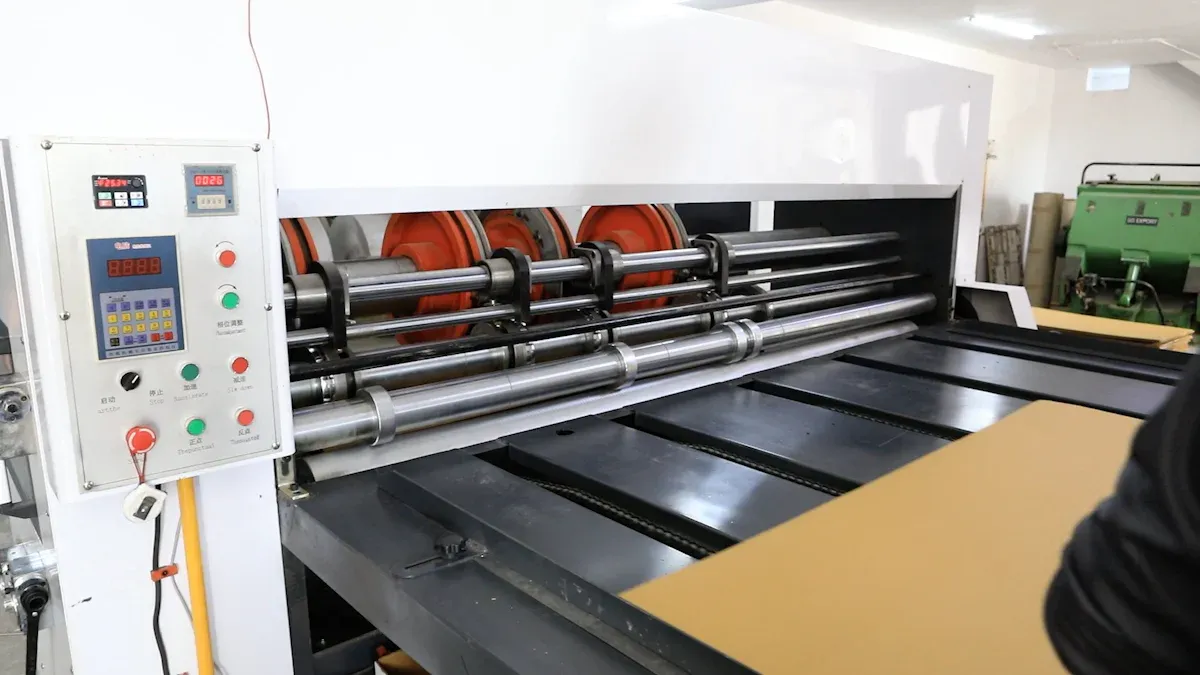
You operate an inline flexo printing machine by running the substrate through a series of stations arranged in a straight line. Each station performs a specific task, such as printing, drying, or cutting. The process uses flexible plates made from rubber or plastic to transfer ink onto the substrate. You benefit from a feeding system that keeps the substrate moving smoothly and adjusts automatically for different materials. The ink system applies ink evenly with tools like doctor blades. Drying units, such as infrared or UV dryers, cure the ink quickly to prevent smudging. Advanced automation lets you monitor the process in real time, change plates automatically, and adjust pressure for consistent results.
Multiple steps—printing, drying, cutting, and laminating—happen in one automated line.
The machine uses precise controls for ink application and substrate tension.
Smart systems help you maintain print quality and reduce manual work.
You can reach high speeds, sometimes up to 600 meters per minute, which boosts productivity.
You gain several advantages when you use an inline flexo printing machine for packaging:
Efficiency increases because you combine printing, varnishing, and die-cutting in one setup.
You can print on many substrates, including films, paper, and labels, which gives you flexibility.
The machine delivers sharp details and vibrant colors, making your packaging stand out.
Inline processing reduces the risk of errors compared to separate workflows.
You save time and money by lowering labor needs and setup times.
Automated quality control and precise feeding help you cut down on waste.
Features like remote monitoring and AI-based defect detection prepare your operation for the future.
Tip: Inline flexo machines let you move from blank material to finished product in one continuous flow, which means you can handle large orders quickly and efficiently.
You may face some challenges with inline flexo machines. Print quality can suffer if you see uneven color, blurred images, or ghosting. Equipment malfunctions and substrate handling issues sometimes occur. Drying problems may affect ink adhesion and clarity. Common causes include clogged rollers, incorrect ink viscosity, and poor plate maintenance. You need to watch for substrate tension changes and registration errors. Dirt and contaminants can also impact results. To keep your flexo printing machine running smoothly, you must clean, calibrate, and maintain it regularly. Operator training is important for consistent print quality and efficiency.
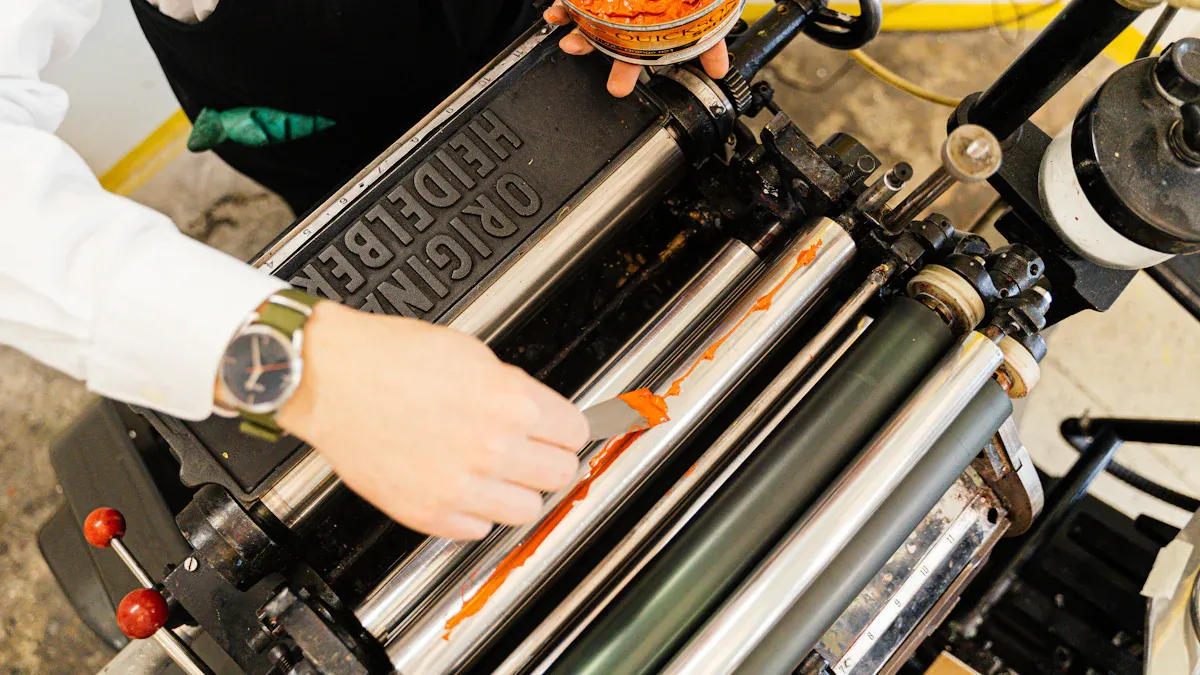
You operate a stack flexo printing machine by moving the substrate through a series of color stations stacked vertically or horizontally. Each station prints a different color, and the machine uses advanced sensors to keep everything in perfect alignment. The process follows several key steps:
Sensors detect and position each sheet or roll, making sure materials stay in the right place.
Clamps or suction cups pick up and move sheets of paper, plastic, or other materials with precision.
Computer controls adjust the strength and speed of the clamps, so every piece gets handled consistently.
The machine stacks printed materials with exact angles, spacing, and pressure, creating strong, uniform products.
Finished stacks move to packaging, ready for shipping or further processing.
This method gives you control over each stage, helping you achieve reliable results every time.
You gain many advantages when you choose a stack flexo printing machine for packaging. These machines print on a wide range of materials, including paper, cardboard, plastic film, and foil. You can expect sharp, vibrant colors and precise registration, even with complex designs. The vertical design saves valuable floor space, which is helpful if your production area is limited. High-speed operation and simultaneous multi-color printing boost your efficiency and lower your costs, especially for large jobs. Automation features, such as web tension control and color management, make operation simple and reduce errors. You also support sustainability by using water-based inks and energy-saving systems.
Note: Easy access to each color unit means you can clean and change them quickly, reducing downtime and keeping your production line moving.
Here is a quick look at the main advantages:
Advantage | Explanation |
|---|---|
Space Efficiency | Vertical stacking saves floor space. |
Enhanced Color Management | Independent stations deliver accurate, vibrant prints. |
Versatility in Substrates | Prints on paper, film, foil, and cardboard. |
Easy Maintenance & Operation | Good access to units for cleaning and changeovers. |
Cost Efficiency in Long Runs | High-speed, multi-color printing lowers costs for big jobs. |
You may notice some challenges with stack flexo machines. Registration can be less precise for extremely complex graphics compared to inline systems. The vertical design may require higher ceilings in your facility. You need to monitor substrate tension and alignment closely to avoid print defects. Regular maintenance and operator training help you keep the machine running smoothly and ensure consistent print quality.
You want your packaging to stand out with sharp graphics and vibrant colors. Print quality is a top priority for both inline and stack flexographic printing machines. Inline presses deliver high-resolution output with precise registration, making them ideal for flexible packaging and high-quality labels. Stack presses offer versatility and ease of operation, which helps when you need frequent job changes for flexographic label printing or corrugated packaging.
Machine Type | Print Quality Strengths | Typical Applications |
|---|---|---|
Inline Flexo | High-speed, sharp, precise prints | Flexible packaging, high-quality labels |
Stack Flexo | Versatile, easy to operate, good for frequent changes | Labels, corrugated packaging |
Recent technology advancements have transformed print quality in 2025. You benefit from automation and AI, which enable real-time monitoring and automated setup. Modular designs let you tailor your label printing machine for specific jobs. Improved tension and pressure control systems ensure consistent, high-resolution prints on many substrates. Quick-change features and advanced registration control keep your flexographic label press accurate, even at high-speed.
Tip: Hybrid solutions now combine flexo and digital label printers, giving you the best of both worlds for short and long runs.
Speed and efficiency drive your production success. Inline flexographic printing machines excel at high-speed, high-volume jobs. You can reach speeds up to 600 meters per minute, which is perfect for large flexible packaging orders. Stack presses also deliver high-speed performance, but they shine when you need to switch jobs quickly or handle diverse packaging types.
Automation plays a huge role in boosting efficiency. Your machine can now automate job setup, load plates, and set parameters. Automated ink supply and registration control keep your print quality consistent. Real-time monitoring and predictive maintenance help you avoid downtime. Automated cleaning systems extend the life of your flexographic printing machine and reduce manual labor.
Automation reduces setup times and human error.
Advanced sensors and feedback loops maintain color and registration accuracy.
Automated inspection systems catch defects early, saving you time and materials.
You need a label printing machine that handles many materials. Stack flexo presses work with paper, cardboard, plastic films like BOPP and PET, and flexible packaging materials. Inline presses focus on flexible films, folding cartons, and specialty substrates. Both types support water-based, solvent-based, and UV inks, so you can meet different packaging needs.
Substrate Type | Inline Flexo | Stack Flexo | Typical Use Cases |
|---|---|---|---|
Kraft Paper | ✓ | ✓ | Shipping boxes, industrial packs |
Coated Paperboard | ✓ | ✓ | Retail packaging, display boxes |
BOPP Film | ✓ | ✓ | Food packaging, pouches |
Bio-Based Films | ✓ | ✓ | Eco-friendly packaging |
SBS Board | ✓ | ✓ | Luxury boxes, cosmetics |
Expanded substrate compatibility in 2025 comes from improved tension control and adaptive drying modules. You can now print high-resolution graphics on a wider range of materials, supporting both traditional and eco-friendly packaging.
Space matters in your production facility. Stack flexographic label presses use a vertical design, so they save floor space and fit well in smaller areas. Inline presses need more horizontal space because their print units line up in a row. This larger footprint allows you to add more printing units and integrate finishing processes, which is great for complex, multi-color jobs.
Digital integration sets inline presses apart. You get advanced all-servo drive systems and real-time digital controls. These features coordinate multiple drives, manage register control, and use AI for error compensation. Stack presses offer independent control for each color station, which is helpful for double-sided or multi-color printing, but they do not match the digital integration level of inline presses.
Note: Seamless integration with digital label printers and finishing equipment helps you streamline your workflow and boost productivity.
You want the best return on your investment. Stack flexo presses have a lower initial cost, making them attractive for startups or smaller operations. Inline presses require a higher upfront investment, but you gain superior efficiency, automation, and waste reduction. Over five years, inline presses often deliver a lower total cost of ownership due to higher throughput, less waste, and lower labor costs.
Cost Aspect | Inline Flexo (High-Automation) | Stack Flexo (Less Automated) |
|---|---|---|
Initial Investment | Higher | Lower |
Operational Costs | Lower | Higher |
Waste Reduction | Significant | Moderate |
Throughput | Increased | Lower |
Labor Costs | Lower | Higher |
5-Year Total Cost of Ownership | Lower | Higher |
ROI Expectation | Faster | Slower |
You should look at the total cost of ownership, not just the purchase price. Inline presses with advanced technology and digital controls help you access higher-margin markets and achieve faster ROI. Stack presses suit lower-margin, paper-based packaging and labeling, but may have higher operational costs over time.
Tip: Leading brands like Henghao offer strong after-sales support, reliable components, and customizable solutions, helping you maximize your investment and minimize downtime.
Before you choose a packaging printing machine, you should ask yourself some important questions. These questions help you match your needs with the right flexographic printing machine or label printing machine. Consider the following:
What is your expected production volume?
What print quality do you require for your packaging?
What is your available budget for the machine?
What finishing options do you need, such as die-cutting or lamination?
What is the required print width for your operation?
How many colors do you need to print?
What types of substrates will you use, such as paper, film, or cardboard?
What ink types are compatible or preferred for your products?
By answering these questions, you can decide if an inline or stack flexo press, or even a hybrid solution, fits your operation best. You also ensure your packaging printing machine supports your technical and material requirements.
You will find that different machines work better for certain packaging jobs. Here are some common scenarios:
Inline flexo presses have printing decks in a straight line. You can use them for large substrates and continuous processes. They work well for long print runs and for printing labels on plastic film bases.
Stack flexo presses have vertically stacked decks. These machines save space and are cost-effective. You can use them for films, labels, small cartons, and plastic bags made from polyethylene (PE) or polypropylene (PP).
Central impression cylinder machines are good for flexible packaging, aluminum packages, preprinted inserts, and heat-shrinkable labels.
If you need to print on a wide range of materials, stack type flexographic printing machines offer flexibility. They are ideal for limited floor space and frequent job changes.
Inline flexographic printing machines simplify operation and maintenance. You can use them for continuous processes and long print runs, especially in flexible packaging.
Tip: For custom label printing or jobs with variable data, digital label printers and hybrid presses can handle short runs and complex graphics efficiently.
You will see rapid changes in packaging printing machine technology in 2025. These trends shape the future of digital label printing and flexible packaging:
Single Pass Printing and Customization: Single pass printers let you print entire jobs in one go. You can add variable data like QR codes or regional designs. This supports fast turnaround and custom packaging on materials such as corrugated cardboard and flexible films.
Eco-friendly Inks and Materials: Many companies now use VOC-free UV inks and recyclable substrates. This shift meets new regulations and consumer demand for green packaging.
Smart Packaging Features: You can add anti-counterfeiting measures, NFC tags, and QR codes. These features improve security and traceability.
Automation and AI: Robotics and AI-driven automation boost production efficiency. They help with predictive maintenance and quality control, reducing downtime.
Personalized and Interactive Packaging: Digital printing technology allows you to create tailored designs. You can add interactive elements like augmented reality to engage consumers.
Hybrid presses stand out in 2025. They combine flexo and digital printing in a single pass. You can use them for limited editions, seasonal packaging, and regional campaigns. Hybrid technology supports short to medium runs and high SKU counts. You get the flexibility of digital with the decorative power of flexo. This approach reduces setup costs and speeds up time-to-market for new products.
The flexographic printing machine market continues to grow. Experts expect global revenue to reach over 1.3 billion USD in 2025. Flexible packaging drives much of this growth, especially in Asia-Pacific. More companies invest in advanced features, digital label printers, and hybrid presses to stay competitive.
Note: Henghao stands out as a recommended brand. The company focuses on innovation, eco-friendly solutions, and strong customer support. You can rely on Henghao for tailored advice and advanced features that fit your packaging needs.
You should match your flexo printing machine choice to your production needs and industry requirements.
Stack presses work well for high-volume runs and frequent design changes.
Inline presses suit complex jobs with integrated processes.
Leading brands like Henghao and W&H offer advanced, reliable solutions.
Consult with experts or request a demo before buying. This step helps you avoid costly mistakes and ensures your machine meets your operational goals.
Inline flexo machines place print stations in a straight line. Stack flexo machines arrange stations vertically or horizontally. You choose inline for high-quality, integrated jobs. You pick stack for flexible, space-saving setups.
You should use inline flexo machines for short runs. They offer fast setup and easy changeovers. This helps you save time and reduce waste when you print small batches or many SKUs.
Yes, both inline and stack flexo machines support eco-friendly materials. You can use water-based inks and recyclable substrates. Many brands, including Henghao, offer solutions for sustainable packaging.
Henghao provides reliable flexo printing machines with strong after-sales support. You get customizable options, technical training, and spare parts. Many customers trust Henghao for quality and innovation in packaging.