Views: 0 Author: Site Editor Publish Time: 2026-08-08 Origin: Site
Acquiring a new press represents much more than a simple equipment upgrade. It signals a strategic shift in your facility's production capacity, waste reduction strategies, and margin control. A well-chosen machine transforms raw materials into highly profitable finished goods at unprecedented speeds. Packaging converters face intense market pressures today. You constantly deal with shorter run lengths, tight profit margins, and surging demand for sustainable substrates. These operational challenges demand more automated, highly efficient press architectures to keep modern production lines viable.
This article goes beyond basic definitions. We provide a rigorous, decision-stage framework for evaluating press configurations, mechanical integrity, and long-term operational efficiency. We examine crucial factors driving performance directly on the factory floor. By understanding these technical nuances, you will learn exactly how to align press capabilities with your specific output goals. You can then position your business to capture higher-margin contracts confidently.
Evaluating press upgrades usually begins by identifying core friction points on the production floor. Legacy presses often suffer from frequent registration drift. This instability generates excessive make-ready waste during job changeovers. Older machines also struggle to process highly extensible films. Operations inevitably slow down when operators cannot maintain consistent web tension across multiple print stations. You must eliminate these bottlenecks to protect your profit margins.
You need to define clear success criteria before evaluating new equipment. A successful press implementation drastically reduces job changeover times. It ensures predictable, repeatable color matching across various substrates. Modern configurations also feature seamless integration into existing prepress workflows. Operators spend less time adjusting manual settings and more time running saleable products. These factors collectively determine the overall success of the investment.
Financial evaluation requires looking far beyond the initial sticker price. Assessing a Flexo Printing Machine involves analyzing ongoing operational expenditures. You must account for daily ink consumption rates. Energy demands for sophisticated drying modules heavily impact utility bills. Maintenance downtime directly subtracts from your facility's revenue generation. True profitability relies on balancing initial capital investments against these continuous, compounding operational costs.
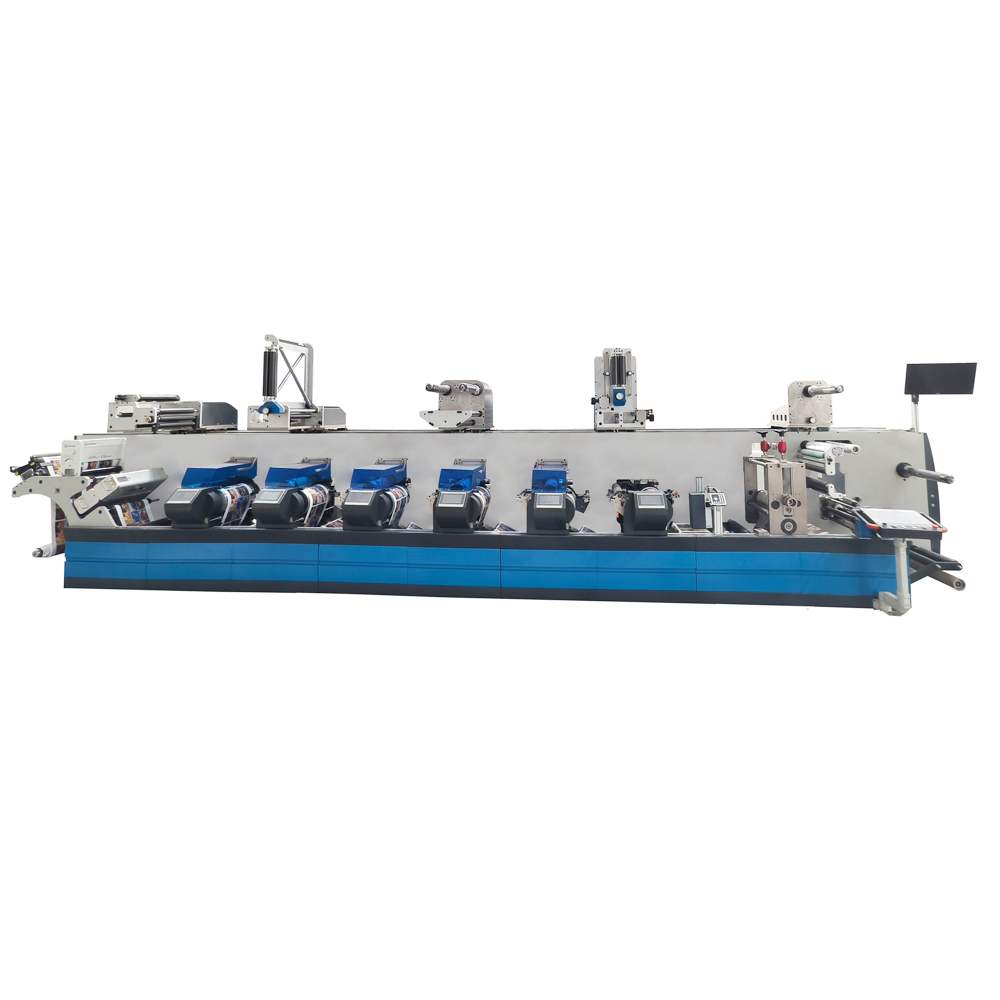
Press design fundamentally dictates substrate versatility. It governs your floorspace utilization and determines maximum web width capabilities. We will explore the operational logic behind three primary architectures. Each configuration manages web tension and physical footprint differently.
The inline configuration utilizes a horizontal layout. This design excels in modularity. You can easily add sequential inline finishing units like die-cutting, varnishing, and laminating stations. The horizontal path simplifies operator access to individual print decks. The Inline Flexo Printing Machine offers distinct advantages for custom label manufacturing.
These machines primarily handle narrow to mid-web applications. They are highly ideal for pressure-sensitive labels, folding cartons, and heavy paperboards. Thick materials travel easily through the straight web path. However, this architecture requires significant linear floorspace. Web tension management over long distances proves complex. Registering highly stretchable films often becomes problematic across extended horizontal runs.
This architecture features a vertical arrangement of print decks. The vertical stacking allows for a highly compact footprint. Each printing station operates independently. Operators can change plates on unused decks while the press continues running. Facilities short on space often favor the Stack Flexo Printing Machine to maximize factory floor efficiency.
Stack presses perform exceptionally well on thick substrates. They easily handle multi-web applications. They also accommodate double-sided printing in a single pass efficiently. Unfortunately, they present noticeable trade-offs. You generally see lower registration accuracy on stretchable substrates compared to central impression models. They also typically operate at slower maximum top speeds.
A central impression press uses one single large impression cylinder. This massive drum supports the substrate continuously across all surrounding print decks. The material remains tightly secured to the cylinder throughout the entire printing process. This design virtually eliminates web stretch between color stations.
CI presses dominate applications using highly extensible materials. They are the absolute standard for thin flexible packaging films. They manage wide-web applications requiring exact, microscopic registration flawlessly. They demand a larger initial investment but deliver unparalleled precision on delicate plastics.
Mechanical specifications directly translate to daily production realities. You must evaluate internal components based on their ability to reduce waste and improve consistency.
Compare conventional mechanical gear drives against direct-drive servo motor technology. Legacy gear systems inherently suffer from mechanical backlash. Servos eliminate this backlash entirely by driving cylinders independently. They enable instantaneous, automatic registration adjustments. This precision directly reduces make-ready waste. Operators reach saleable color in a fraction of the time.
Mechanical integrity determines print quality at high speeds. Frame rigidity prevents vibration transfer to the print decks. You must inspect the quality of sleeve systems for both anilox and plate cylinders. Poor vibration dampening causes dot gain issues. Superior structural engineering guarantees print consistency during maximum speed runs, especially on complex 8-color jobs.
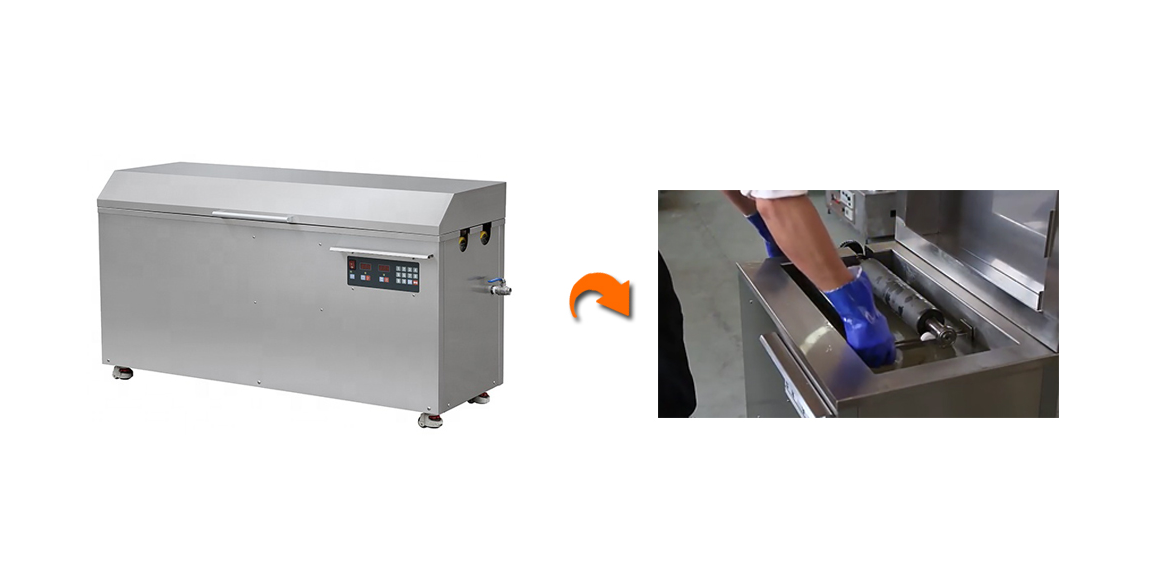
Inking systems require careful evaluation. Chambered doctor blade systems provide superior, enclosed ink control compared to open systems. Drying modules also demand intense scrutiny. You must match the drying technology to your specific substrate thermal limits. Ensure energy consumption compliance aligns with your facility limits.
Drying Technology Comparison Chart| Drying Technology | Best Substrates | Energy Efficiency | Line Speed Impact |
|---|---|---|---|
| Hot Air | Paper, Board, Non-stretch Films | Moderate (High heat loss) | Requires longer web paths for high speeds |
| Infrared (IR) | Water-based inks, Heavy substrates | Medium (Targeted heating) | Supports fast drying on thicker materials |
| Traditional UV | Plastics, Shrink sleeves, Labels | Low (High power draw) | Enables very high line speeds instantly |
| LED-UV | Heat-sensitive films, Thin plastics | High (Low power, instant on/off) | Maximizes speeds without thermal distortion |
Digital integration from prepress to press is no longer optional. Evaluate the machine's automated wash-up cycles. Check for robust job memory recall functions. Assess compatibility with industry-standard prepress software suites. Intelligent automation significantly reduces manual operator intervention. This minimizes human error and speeds up job changeovers.
The printing industry currently faces a severe operator skills shortage. Buying an overly complex machine carries substantial operational risk. You need intuitive Human-Machine Interface (HMI) systems to flatten the learning curve. Vendor training programs remain just as critical as the hardware itself. An advanced press yields poor results if your staff cannot confidently operate it.
Floor-level maintenance pain points cause frequent, unplanned delays. Operators must manage these issues proactively to sustain output.
Hidden implementation hurdles often surprise buyers. Facility readiness requires thorough preparation. Heavy multi-color presses demand specific structural floor reinforcements. Upgraded HVAC systems must handle increased solvent and VOC extraction rates. High-draw drying units, especially traditional UV systems, require robust power grid stability. You must prepare your physical plant long before the delivery truck arrives.
Never rely solely on vendor-optimized demonstration files. You should demand live performance demonstrations. Bring your facility's specific challenging substrates. Provide typical, complex job files from your own prepress department. These real-world tests reveal true machine capabilities and expose potential tension or registration flaws.
Treat the vendor relationship as a long-term partnership. Service Level Agreements (SLAs) matter immensely. Assess their local service engineering network. Check their remote diagnostic capabilities for troubleshooting software faults. Verify average spare parts lead times. A broken gear or blown servo drive costs thousands in lost production daily if parts remain stuck overseas.
Scalability extends the profitable life of your press. Modularity allows the equipment to grow alongside your business.
Acquiring a new flexographic press is a foundational investment in production predictability. The right architecture stabilizes your output, minimizes waste, and protects your margins. You must look past superficial specifications and evaluate mechanical realities.
A: Inline presses manage web tension across a long horizontal path, making extensible films trickier to register accurately. A stack press uses a vertical path, keeping a compact footprint, but still struggles with stretchable substrates compared to CI presses. Stack presses excel in thick materials and double-sided printing, while inline setups handle complex sequential finishing better.
A: Servo motors drive cylinders independently, eliminating traditional gear backlash. This precision enables rapid, automatic registration adjustments. You reach saleable color faster, drastically cutting make-ready waste. For short runs, these saved minutes and materials compound quickly, significantly accelerating your overall profitability.
A: Major bottlenecks include anilox roll scoring, rapid doctor blade wear, and intensive ink chamber cleaning. Operators must frequently clean anilox cells to maintain correct ink transfer volumes. Worn doctor blades compromise print quality and damage rollers. Standardizing daily wash-up cycles helps mitigate these time-consuming delays.
A: Commissioning typically spans four to eight weeks. Site preparation, including floor reinforcement and electrical upgrades, happens beforehand. Physical installation takes roughly two weeks. Vendor-led operator training and test runs consume another two to four weeks before the press achieves reliable, full-scale commercial production.