Views: 0 Author: Site Editor Publish Time: 2026-08-13 Origin: Site
Acquiring industrial printing equipment represents a high-stakes capital expenditure for any modern packaging facility. Shifting to or upgrading flexography requires aligning mechanical capabilities directly against your long-term production targets. You must consistently produce high-quality labels and flexible packaging. Today's market introduces a clear operational problem. You must constantly balance high-volume cost efficiency against extreme substrate versatility and strict environmental compliance. The pressure to print flawlessly on varied materials while reducing waste makes equipment selection incredibly difficult. We wrote this article to solve this exact challenge. Our goal is to provide technical decision-makers an objective breakdown of core functionalities and press configurations. We will examine realistic ROI timelines to directly inform your procurement shortlisting. You will learn how mechanical workflows dictate print quality and speed. Finally, we will guide you through choosing the optimal machinery layout to match your facility constraints.
A modern Flexo Printing Machine operates on a highly precise mechanical workflow. Understanding this workflow helps you establish technical authority during vendor negotiations. It also explains exactly how the machine dictates your final output quality. The heart of the entire inking system is the anilox roller. This precision cylinder handles volumetric ink metering. It features millions of microscopic engraved cells spread across its surface. Cell count and cell volume directly control how much fluid reaches the printing plate. Precise metering guarantees strict color consistency across thousands of impressions. It also significantly reduces expensive ink waste during marathon production runs. Operators often pair these rollers paired enclosed doctor blades to shear off excess ink uniformly.
Next, the flexible photopolymer plate transfers the image onto your material. This durable plate mounts securely onto the rotating plate cylinder. It rotates continuously against the steel impression cylinder. You must apply exact micro-adjustments to the impression pressure. If you apply too much pressure, the substrate will deform or stretch. This physical risk increases heavily when handling very thin polyethylene films. Conversely, too little pressure results in broken images and skipped dots. Mastering this kiss-impression technique separates average operators from master printers.
Between-color drying and final curing stations follow the printing sequence directly. Different systems utilize infrared heat, hot air impingement, or final UV curing lamps. You can view these curing stations as ultimate bottleneck-breakers. Fast, efficient curing enables immediate post-press finishing. It prevents smudging entirely and keeps your production line moving at maximum mechanical speed.
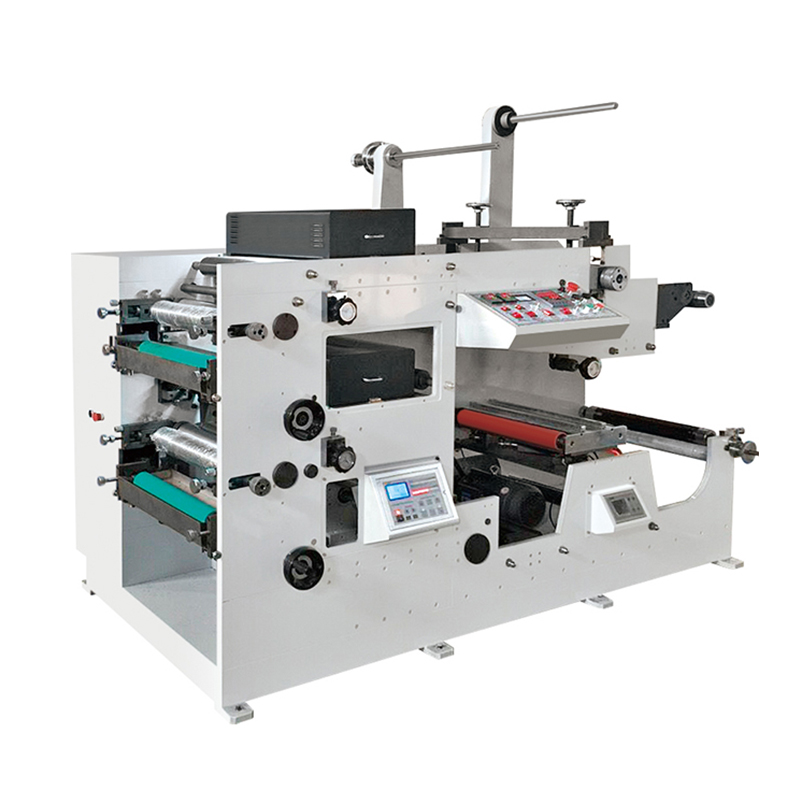
Your facility layout and specific operational demands dictate your ideal press configuration. Let us build a comparative decision matrix to guide your physical constraints. You generally choose between two dominant architectures in the market.
A Stack Flexo Printing Machine features a vertical arrangement of individual print stations. These units stack securely on top of each other around a central frame. This vertical layout shines in manufacturing facilities battling severely limited horizontal floor space. The best use cases involve producing flexible packaging and wide-web printing applications. One major physical advantage stands out immediately. It can print on both sides of the moving web in a single pass. The web travels upwards and weaves through the color stations. However, you must accept a specific mechanical trade-off. Stack models typically offer slightly lower registration accuracy at maximum production speeds compared to horizontal models.
Conversely, an Inline Flexo Printing Machine utilizes a horizontal, sequential arrangement. The independent print stations align neatly side-by-side. This setup acts as the undisputed champion for high-end labels, folding cartons, and heavy board substrates. It requires a significantly larger physical footprint inside your factory. In return, it excels by delivering truly superior color registration. The web travels in a straight line, which drastically improves tension control. Crucially, the horizontal track allows for seamless modular expansion. You can effortlessly add inline die-cutting, cold foiling, and laminating modules. This transforms the press into a single-pass manufacturing powerhouse.
| Feature | Stack Configuration | Inline Configuration |
|---|---|---|
| Arrangement | Vertical stacking of print stations | Horizontal sequential alignment |
| Floor Space | Minimal footprint required | Requires extensive factory length |
| Best Applications | Flexible packaging, wide-web films | Labels, cartons, heavy substrates |
| Double-Sided Printing | Easily achieved in one pass | Requires additional turn-bar modules |
| Registration Accuracy | Moderate at peak operating speeds | Exceptionally high precision |
| Inline Finishing | Limited space for modular add-ons | Seamless integration of die-cutting |
We must move beyond generic machine speed claims. You need specific commercial benefits to justify this heavy capital investment. Let us tie these advanced mechanical features directly to tangible business outcomes.
First, consider unparalleled substrate versatility. You gain the capability to print effortlessly on extremely non-porous materials. Metallic films, shrink sleeves, and polyethylene process smoothly through the press. You can also print on highly textured surfaces like corrugated cardboard. The flexible photopolymer plates conform easily to these uneven surfaces without compromising fine print fidelity. This agnosticism allows you to accept diverse jobs from vastly different industries.
Second, massive economies of scale completely transform your operational profitability. We freely acknowledge the high upfront plate costs. Photopolymer plates are expensive and time-consuming to produce. However, their physical durability easily offsets this initial financial hurdle. A single set of well-maintained plates often survives millions of impressions. This extreme longevity forcefully drives down your cost-per-unit on long production runs. Once the press starts running, it prints money.
Third, ink adaptability solves increasingly strict environmental compliance issues. Flexography pairs beautifully with water-based, solvent-based, and UV-curable inks. This chemical adaptability provides a massive strategic advantage. You can achieve strict food-grade packaging compliance quickly using specific water-based formulations. Furthermore, modern water-based inks drastically lower Volatile Organic Compound (VOC) emissions. This keeps your facility safe, protects your operators, and ensures global regulatory compliance.
Demonstrating industry trustworthiness means highlighting operational risks, workflow limitations, and hidden adoption costs. Flexography is not a magical, effortless solution for every print scenario. You must prepare for specific technical hurdles.
The prepress bottleneck constantly demands your attention. Making and mounting printing plates costs real time and money. Transparently, flexo remains highly inefficient for micro-runs. If your client jobs require frequent graphic changes, this analog process will drain your resources quickly. You must generate new physical plates for every single design alteration.
Changeover times and mechanical setup generate unavoidable material waste. You must address this reality directly. Modern automated features remain absolutely necessary to combat this expensive waste.
These features work together to minimize setup waste and crush idle downtime.
Finally, operator expertise dictates your overall success. Despite rapid automation, flexography remains a fundamentally analog manufacturing process. You still require highly skilled press operators. They must actively manage precise color matching and web tension control. They must also troubleshoot complex dot gain issues during live runs. Dot gain occurs when ink spreads mechanically on the substrate. Only an experienced operator can adjust pressure and ink flow to counter this physical phenomenon.
Entering the procurement phase requires a concrete, objective checklist. Evaluate potential vendors rigorously against your specific operational goals. Do not rely solely on glossy brochure specifications.
Start by testing baseline automation thresholds. Evaluate the extent of servo-motor integration across the entire press. True servo presses offer independent motors for each cylinder. Verify the reliability of automatic web-guiding mechanisms. You should also demand closed-loop color inspection systems. These automated cameras catch registration errors before human eyes can see them. These advanced tools drastically reduce your reliance on manual labor.
Next, prioritize platform scalability and modularity. Your business will inevitably grow and shift focus. Recommend checking if the machine allows for future retrofitting. Can you easily add a digital inkjet station later for variable data? Can the steel frame support a heavy inline rotary screen unit down the line? Choose a platform capable of evolving alongside your customer demands.
Lastly, emphasize after-sales engineering and OEM support. Industrial hardware fails eventually under heavy loads. The critical nature of local parts availability cannot be overstated. Scrutinize vendor maintenance Service Level Agreements (SLAs) deeply. Ask for guaranteed emergency response times. Furthermore, demand comprehensive vendor-provided operator training programs. A world-class printing machine fails completely without properly trained hands guiding its daily operation.
A well-configured flexographic printing press remains the optimal solution for high-volume, continuous-web operations. It handles diverse substrate requirements flawlessly while driving down per-unit costs at scale. The mechanical durability of the process ensures years of profitable, high-speed production.
Audit your current job mix carefully today. Analyze your average run lengths and your most frequently requested substrate types. Use this production data to definitively decide whether an inline or stack configuration fits your factory floor best. Contact a certified equipment vendor soon. Request a full technical consultation and run a custom job simulation to see the output firsthand.
A: A commercial flexo press typically lasts 15 to 20 years with proper preventative maintenance. You can significantly extend its operational longevity by retrofitting older mechanical parts with modern servo drives and updating the software controls. This ensures strong ROI over decades of continuous production.
A: The decision relies entirely on the break-even point. Digital printing wins easily on short-run variability because it requires zero plate setup. However, flexo completely dominates mid-to-high volume runs. It wins decisively on mechanical speed, drastically lower consumable ink costs, and unmatched long-run economy.
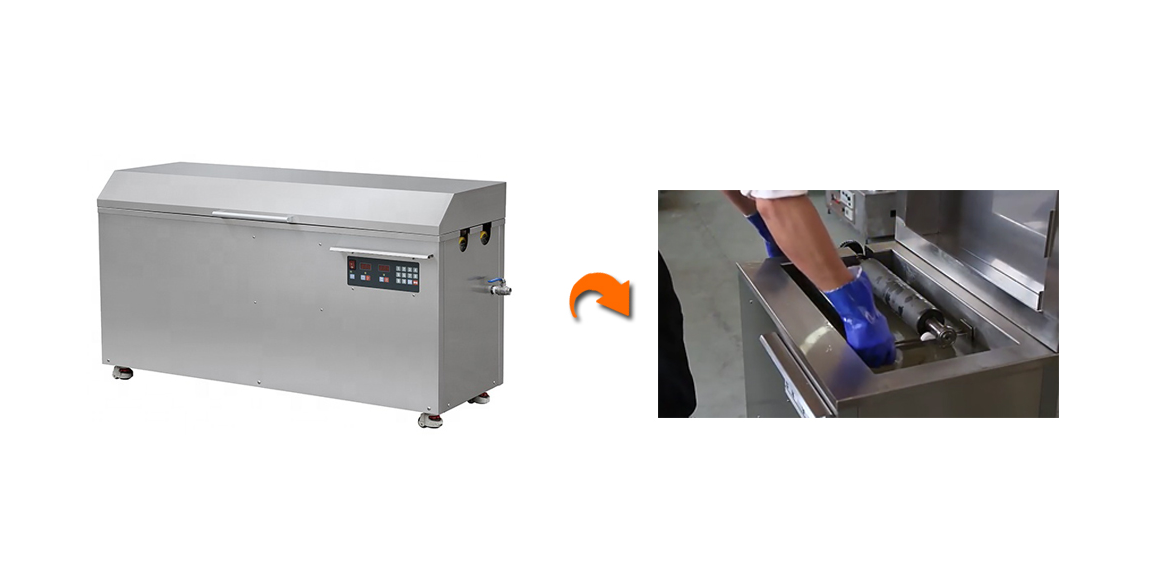
A: The most critical requirement is rigorous anilox roller cleaning. You must use specialized ultrasonic baths or modern laser cleaning systems regularly. Deep cleaning maintains exact microscopic cell volumes. This prevents disastrous ink transfer failures and ensures color density remains perfectly consistent.