Views: 182 Author: Site Editor Publish Time: 2025-06-24 Origin: Site
Flexographic printing, often referred to as flexo printing, is a versatile, high-speed printing method used in various industrial applications. At the heart of this printing process is the flexo printing machine, which plays a pivotal role in the packaging and labeling industries. But while flexo printing machines are renowned for their speed and adaptability, the label inspection machine has become an equally essential part of the printing ecosystem—especially in the age of automation, accuracy, and quality assurance.
Flexo printing is a form of relief printing that uses flexible printing plates made of rubber or photopolymer. These plates are wrapped around rotating cylinders on a web press and can print on a variety of substrates, including plastic, foil, acetate film, brown paper, and more.
The process involves:
Ink transfer from anilox rollers to the printing plate.
Substrate feeding via roll-to-roll systems.
Drying between color applications using hot air or UV systems.
Continuous production, ideal for long runs.
Because of its ability to maintain consistent quality and run at high speeds, flexo printing machines are frequently used for producing labels, flexible packaging, corrugated boxes, envelopes, and newspapers.
The most widespread application of a flexo printing machine is in label production. From food containers to pharmaceutical packaging, labels are crucial for branding, compliance, and consumer communication. Flexo printers are widely used to create:
Pressure-sensitive labels
Shrink sleeves
Wrap-around labels
In-mold labels
These labels are often produced in large volumes, requiring high-speed and high-precision printing capabilities. This is where the label inspection machine complements the flexo printing process by ensuring every label meets the required standards.
In industries like food and beverage, cosmetics, and personal care, flexible packaging is becoming increasingly popular due to its cost-effectiveness and convenience. Flexo printing allows for printing on non-porous materials such as plastic films and metallic foils, which are typically used in pouches, sachets, and bags.
Flexo printing machines can integrate with other post-press processes like lamination and die-cutting. However, as volumes increase, the probability of defects also rises. To mitigate this, label inspection machines are used to detect misalignments, smudging, and color inconsistencies during the converting process.
Flexographic machines are ideal for printing on corrugated substrates, which are commonly used in shipping and retail display packaging. Flexo printing enables bold branding, barcodes, and product information to be clearly printed directly on the box.
Due to the rough nature of corrugated boards, maintaining consistent print quality can be challenging. This makes automated inspection systems even more crucial to flag issues early in the workflow.
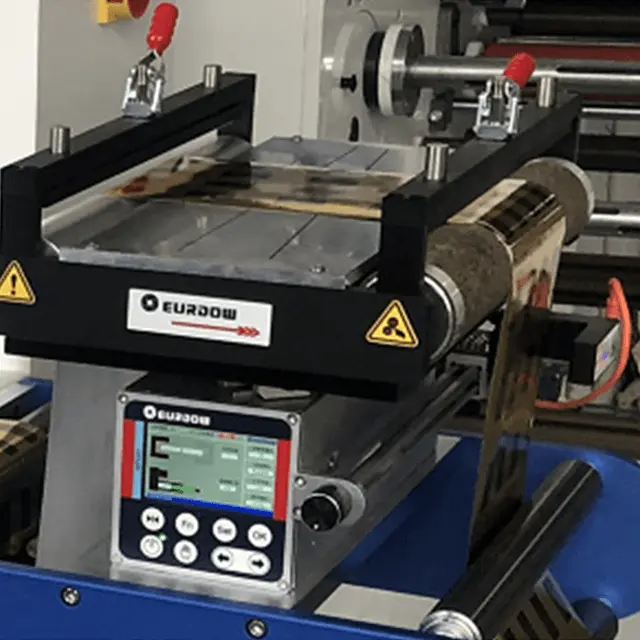
Label inspection machines are sophisticated vision systems designed to scan and evaluate printed labels in real-time. These systems use cameras, sensors, and software algorithms to detect printing defects and provide immediate feedback.
| Feature | Function |
|---|---|
| Real-time image capture | Captures high-speed, high-resolution images of printed labels |
| Defect detection | Identifies printing errors such as color shifts, streaks, or registration misalignment |
| Barcode verification | Ensures printed barcodes meet scannability and industry standards |
| Data logging | Records inspection results for quality assurance and traceability |
| Workflow integration | Communicates with the press or rewinder to stop or flag defective material |
In fast-paced environments where flexo machines print thousands of labels per hour, manual inspection is inefficient and error-prone. Even the smallest defect in label printing can have serious consequences, especially in regulated industries like pharmaceuticals or food. A misprinted barcode or incorrect ingredient list could result in product recalls, legal issues, and damaged brand reputation.
By integrating a label inspection machine, companies ensure that only defect-free products reach the final packaging stage. This not only improves customer satisfaction but also reduces material waste and labor costs.
The seamless integration of label inspection systems with flexo presses is a key advantage in modern printing workflows. These systems can be installed at multiple stages of the production line—on the press, at the rewinder, or during slitting.
On-Press Inspection
Mounted directly on the flexo press, allowing real-time feedback to operators. If an error is detected, the system can halt the press or alert the operator for correction.
Post-Press Rewinder Integration
After printing, rolls are rewound and passed through inspection machines. This method is beneficial for offline quality checks.
In-line Die-Cutting Inspection
Some systems also inspect labels after die-cutting to ensure the shape and layout are within tolerance.
Reduced waste through early defect detection
Increased efficiency via automated rejection systems
Improved traceability with inspection logs and digital reports
Higher compliance with industry standards (e.g., ISO, GMP)
Even though flexographic printing is known for its consistency, certain production variables can lead to undesirable outcomes:
Ink viscosity fluctuations
Plate wear and misalignment
Web tension inconsistencies
Operator errors
Each of these can result in misprints or visual defects. A label inspection machine serves as a safety net, instantly identifying such issues before they escalate.
Moreover, these machines are equipped with machine learning algorithms that can adapt to evolving defect patterns, continuously improving inspection accuracy over time.
A: Yes, with the right configuration, such as a turn bar system, flexo machines can print double-sided materials. However, inspection of both sides may require dual-camera setups or offline inspection procedures.
A: Label inspection systems can be programmed to classify defects based on severity. Major defects (like missing print or barcode failure) trigger stoppages, while minor ones (slight color variations) might only be logged for review.
A: Most modern label inspection systems are modular and can be adapted to various flexo press models and rewinding equipment. However, proper calibration and integration are essential for optimal performance.
A: No. Besides visual inspection, these machines can perform OCR (Optical Character Recognition), barcode validation, and color consistency analysis to ensure full-spectrum quality control.
The flexo printing machine is a powerhouse in the label and packaging world. Its adaptability, speed, and ability to print on a wide range of substrates make it indispensable in modern manufacturing. However, to fully leverage its capabilities, robust quality control measures must be in place.
This is where the label inspection machine becomes indispensable. It not only enhances production accuracy but also protects businesses from costly mistakes and maintains customer trust. As the industry continues to demand faster turnaround and higher precision, the synergy between flexo printing and label inspection will remain vital.